Licensed by Copyright Agency. Source: Millennials warned pension may be gone by retirement as property emerges as Plan B, by Elizabeth Tilley, The Courier-Mail, published on realestate.com.au on 9 June 2026.

Every fortnight, Australian millennials have money taken out of their pay to help fund a pension system that researchers say may not survive in its current form. And most of them have no plan for what comes next.
That is not a scare tactic. It is what the data shows.
Macquarie University forecasts the pension eligibility age will need to rise to 68 by 2029, 69 by 2037, and 70 by 2043 just to keep the system financially stable.
At the same time, Australian Bureau of Statistics data shows that nearly half of all Australian households are not on track for a comfortable retirement, even accounting for superannuation and the pension together.
So if you are in your 30s or early 40s right now, this is worth sitting with.
Why the Age Pension Is Under Pressure
The age pension has been around since 1908. It was built for a very different Australia: shorter life expectancy, a smaller retired population, and a much healthier ratio of working people to retirees.
That ratio has been falling steadily as Baby Boomers move into retirement, and the pressure is only growing. Each time the pension eligibility age rises, more of the burden shifts onto individuals to fund their own retirement years.
Recent policy changes have made things tighter still. Adjustments to deeming rates and assets test thresholds in 2025-26 reduced pension payments for an estimated 180,000 Australians who had previously qualified for the full rate.
For younger Australians still decades from retirement, the trend points toward a system that covers less, accessed later.
“People ask me whether the pension will still exist when they retire, and the honest answer is: probably something will, but it will not look like it does today. The eligibility age will be higher, the means tests will be tighter, and the payment will cover less of what people actually need to live on. That is not a prediction. It is what is already happening. The question is whether Australians are building something to sit alongside it,” says Michael Beresford, Executive Director of Property and Investment Services at OpenCorp.
Is Superannuation Enough to Retire On?
Super has made a genuine difference. The proportion of retirees using it as their main income source has grown from 20% in 2014-15 to 28% today.
But the government pension is still the single most common income source for Australian retirees. Treasury modelling shows that significant numbers of Australians, particularly women, are still retiring without adequate savings.
And here is the practical reality: superannuation is locked away until age 67. For anyone who wants income-generating assets before then, or wants to build something that sits alongside super in retirement, that requires a different kind of plan.
You May Already Have More to Work With Than You Think
One of the most common things we hear from people in their 30s and 40s is that they feel stuck. They want to do something but assume they need to save up a deposit before they can move. For many homeowners, that is not actually the case.
If you have owned your home for a few years and paid down some of your mortgage, you have likely built up equity. That equity is a real asset sitting inside your property, and for most people it is not doing anything. We call it lazy equity.
Using that equity as a deposit for an investment property is one of the most practical ways to get started without touching your savings or changing your lifestyle. You are not borrowing more than you can handle. You are putting an asset you already own to work.
This is how a lot of our clients take their first step. They realise the money they need is already there.
How Two Melbourne Teachers Built Financial Security Outside of Super
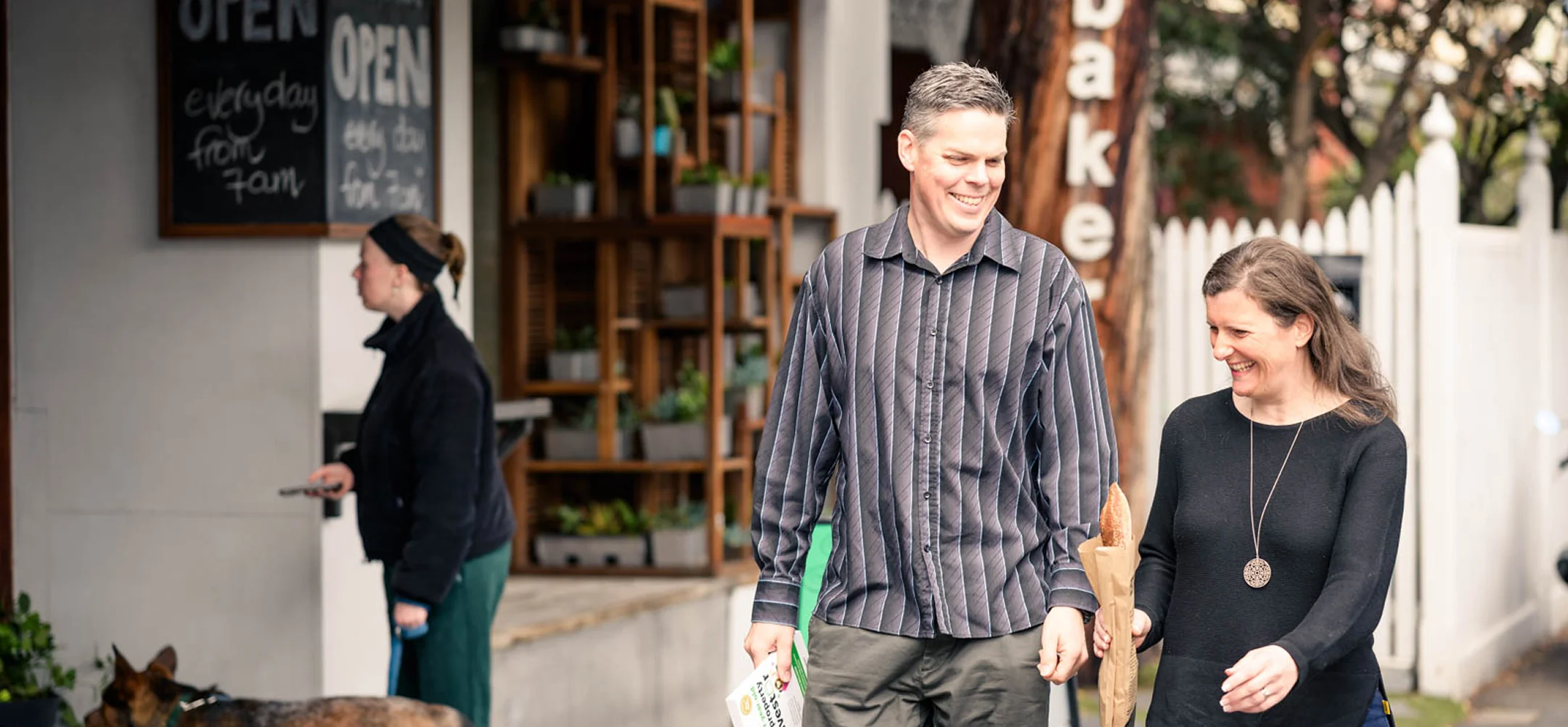
Ross and Gen are OpenCorp clients. They are Melbourne primary school teachers, with three young kids. A few years ago, they had exactly the same question most families in their situation have: what does retirement actually look like on two teacher salaries?
They had been in their own home for around eight years when a property nearby came on the market. That sparked a conversation they had been putting off. Ross’s parents had invested in property. The couple started doing the sums.
“Working in education, we knew our limitations for earning. With three kids, we wanted to be able to set ourselves up with financial security and freedom,” says Ross.
Gen had assumed they would need to save a full deposit before they could act. “I didn’t understand the process of taking out equity. I thought we had to save up a deposit first.”
Once the process was explained, they realised they had more capacity than they thought. The equity sitting in their home was enough to get them moving without touching their savings or putting their family home at risk.
“One of our big things was that we didn’t want it to impact our day-to-day life or put our current property in danger.”
Rather than buying close to home, their adviser guided them toward a Queensland property in 2020. Brisbane was on the cusp of a significant price and rental boom, and the numbers stacked up in a way that surprised them.
“OpenCorp showed us that the cost to rent in Brisbane was like Melbourne, but the cost to buy was so much cheaper. Then he showed us that investing in Queensland would only cost us approximately $100 a week. It was surprising to hear how achievable it was,” says Gen.
Within a month of their first conversation, they had signed a contract. Eighteen months later, the growth in that property had paid off the remaining debt on their family home. Today in 2026, they are ready to use the equity in their first investment to purchase a second.
That is the compounding effect in action. One good decision, made at the right time, creates the platform for the next one.
“The good thing we have found is that our everyday life has not been affected by purchasing an investment property. The fact that our day-to-day lives haven’t changed, and that it was such a smooth experience, has triggered a thirst in us to invest again,” says Ross.
“Our parents invested 20, 30 years ago. It was a different market, but with the same fundamentals and the same message: leave emotion out of it.”
Thinking Strategically Now Sets You Up for Life
Ross and Gen are a good example of what happens when people think about retirement early rather than late. They did not wait until they had all the answers. They asked the right questions at the right time, and they got the right support to act on them.
That is really what this comes down to. Not a complicated financial strategy. Not a big sacrifice. Just a decision, made while there is still time for it to matter.
The pension system is already changing, and the direction it is moving in puts more responsibility on individuals. The property market is not getting cheaper. And time, once spent, cannot be recovered.
For anyone who owns a home and has been sitting on equity without putting it to work, this is the conversation worth having now. Not in a few years. Now.
If you want to understand what your retirement picture actually looks like, and what it would take to build something solid alongside super, book a complimentary Discovery Call with our team at opencorp.com.au/discovery-call.
Frequently asked questions
Will the age pension still exist in Australia?
Most researchers and economists expect some form of age pension to remain, but the eligibility age is projected to keep rising, means tests are likely to tighten, and payment rates are expected to cover a smaller share of actual living costs. Macquarie University research forecasts the pension eligibility age rising to 70 by 2043.
Is superannuation enough to retire on in Australia?
For many Australians, superannuation alone will not be enough. Treasury modelling shows significant numbers of people, particularly women, are still retiring without adequate savings. Super is also locked until age 67, which limits its usefulness for anyone who wants financial flexibility before then.
What is lazy equity and how does it help with property investment?
Lazy equity is the equity built up inside your home that is not currently being used. For homeowners who have paid down part of their mortgage, this equity can be used as a deposit for an investment property, without needing to save a cash deposit from scratch. It is one of the most practical ways for existing homeowners to take their first step into property investment.
What can millennials do to prepare for retirement beyond super?
Building income-generating assets outside of superannuation is one of the most common approaches, including residential property investment. The key factor is starting early enough for long-term growth to compound. Speaking with a qualified property investment adviser is a good first step.
How much does it cost to start investing in property in Australia?
It depends on your equity, borrowing capacity, and the market you are buying in. As Ross and Gen Kirwan found, investing interstate can significantly reduce the weekly holding cost. The first step is understanding what you have available to work with, which is exactly what a Discovery Call with OpenCorp covers.
Is now a good time to invest in property in Australia?
The structural factors that drive property price growth in Australia, including population growth, undersupply, and rising construction costs, are not going away. Waiting for prices to fall significantly is not a reliable strategy, and it means losing time that would otherwise be working in your favour. For most investors, the best time to start is as early as possible.