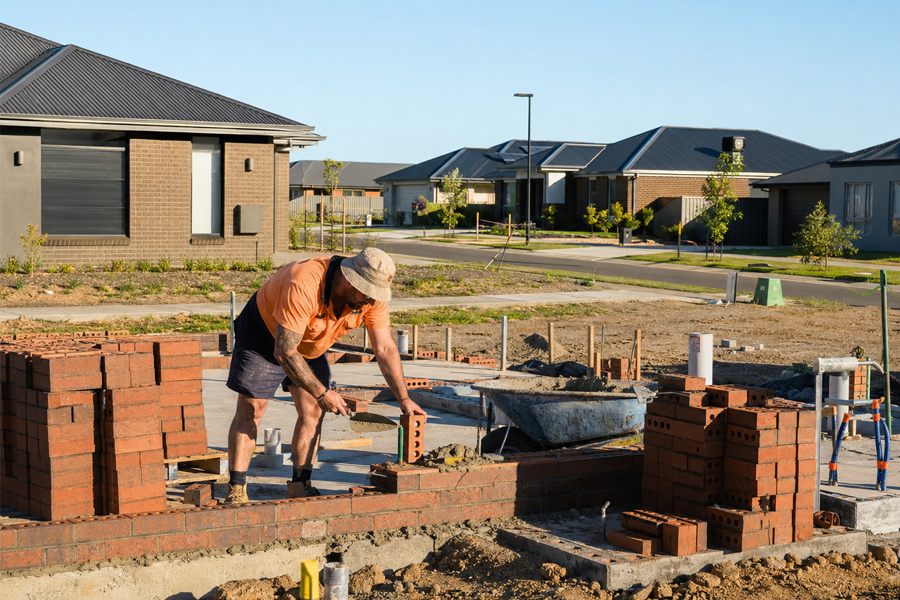
How to avoid expensive new property traps
The Federal Budget has changed the property investment landscape.
With key tax advantages shifting towards qualifying new housing, more investors may begin looking beyond established homes and towards new builds.
But that does not mean every new property is a good investment.
Choosing the wrong location, builder or property could turn a policy-driven opportunity into a very expensive mistake.
What the Budget means for new property
For years, most Australian investors have purchased established property, often within areas they already know.
However, familiarity is not the same as strategy.
The Budget has made the difference between established and qualifying new property more important. As the treatment of established investments becomes less favourable, new property may retain advantages such as negative gearing and depreciation.
This is likely to push more investor demand towards new housing.
In this episode of Brick to the Future, Cam McLellan and Alison unpack why the government is directing investors towards new builds, why housing supply may struggle to keep up and where investors could get caught out.
Why housing supply cannot simply be increased
Australia needs more homes, but delivering them is not as easy as announcing a new housing target.
New supply depends on:
- Serviced land
- Planning approvals
- Infrastructure
- Qualified trades
- Building materials
- Construction costs
- Financially stable builders
These constraints cannot be resolved overnight.
As more investors enter the new-build market, demand for quality land and reliable builders could rise faster than suitable housing can be delivered.
That may place further pressure on land prices, construction costs and rents.
The biggest new-build traps
The most dangerous assumption investors can make is that all new property will perform well.
It will not.
Common risks include:
- Buying in an oversupplied area
- Entering a market after its strongest growth
- Paying an inflated developer premium
- Choosing a financially unstable builder
- Accepting unclear cost-variation clauses
- Buying without understanding local tenant demand
- Focusing on tax benefits instead of investment fundamentals
A tax advantage cannot make up for buying the wrong property.
Not every growth corridor will deliver growth
New housing is often built on the outer edges of expanding cities, meaning investors may need to look outside their local area.
Before selecting a property, it is important to understand:
- Current and future housing supply
- Population growth
- Employment opportunities
- Infrastructure investment
- Affordability
- Rental demand
- Building commencements and completions
A city can be performing strongly while individual corridors within it produce very different outcomes.
The right decision should be based on research, not familiarity or media attention.
The builder matters too
Selecting the right market is only part of the process.
Investors also need to assess whether the builder has the experience, financial capacity and resources to deliver the property.
Important considerations include:
- Trading and delivery history
- Financial stability
- Existing project pipeline
- Construction timeframes
- Contract conditions
- Cost-variation protections
- Warranty and defect processes
The cheapest build is not always the safest.
A lower initial price can become extremely expensive if the project is delayed, significant variations are added or the builder fails.
New property should still be selected strategically
New property can offer several benefits, including depreciation, lower initial maintenance, builder warranties, modern inclusions and stronger tenant appeal.
But these benefits only matter when the property is in the right market.
OpenCorp has focused on new property and research-led market selection for more than 20 years. Our approach assesses capital city markets, growth corridors, local supply and demand, individual property suitability and builder risk.
The strategy is not simply to buy new.
It is to find the right property, in the right market, at the right stage of its cycle.
What investors should focus on
The Federal Budget may influence where investors look, but long-term property performance will still come back to three fundamentals:
- Supply: How much comparable property is available or planned?
- Demand: What will attract more people to live and rent in the area?
- Affordability: Can local households afford the property and its rent?
The opportunity is not new property alone.
It is quality new property selected through research, experience and a clear long-term strategy.
Understand what the Budget means for your strategy
A no-obligation Discovery Call with OpenCorp can help you understand the Budget changes, the risks within the new-build market and the research involved in identifying suitable investment opportunities.
Book a Discovery Call with OpenCorp.